Archivists
Make old recordings findable without losing the source trail.
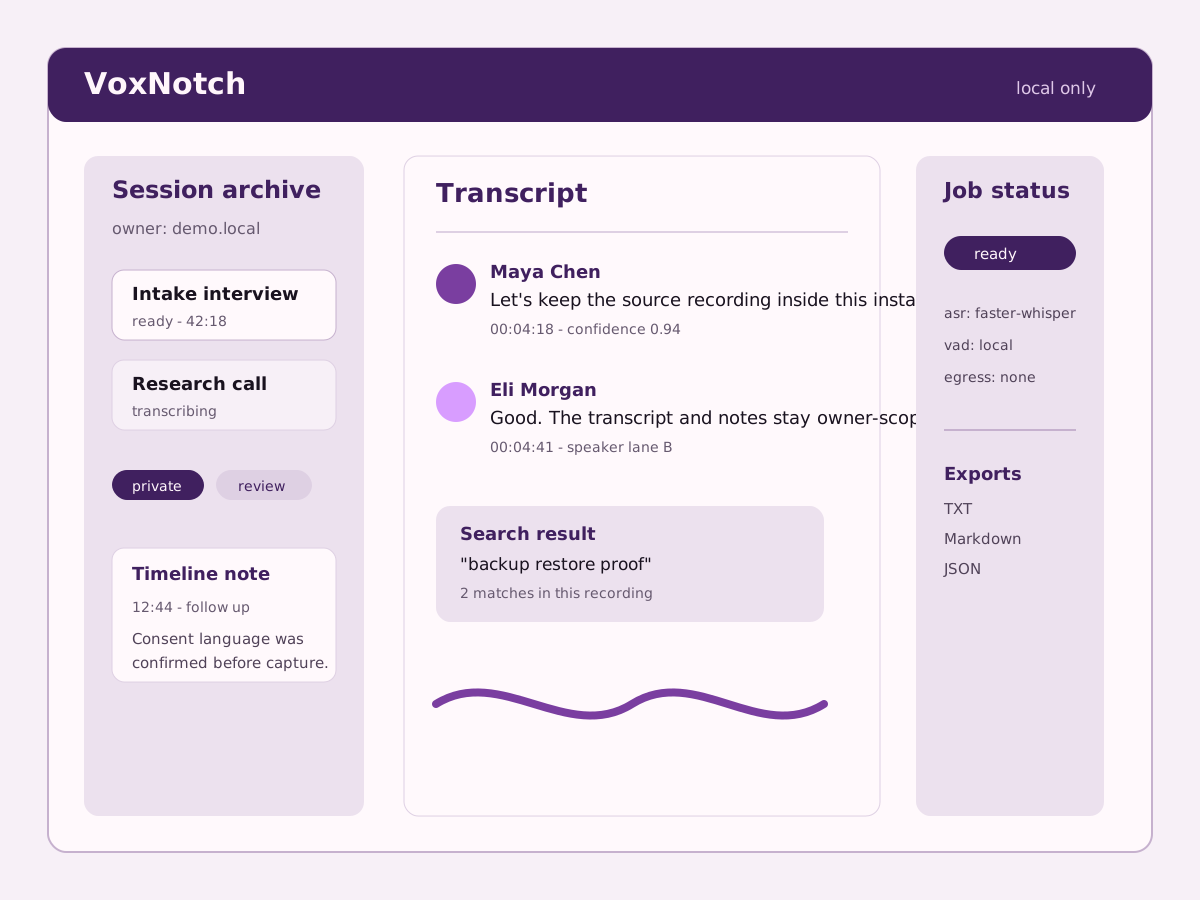
Backlogs become valuable when recordings have transcript text, metadata, tags, notes, collections, and export paths. VoxNotch makes the archive searchable while keeping the source media central.
An archive backlog turning into searchable transcript records and collections.
Archive flow
A library is more than files in a folder.
What makes the archive useful.
Search across recordings
The archive should answer questions across a library, not only inside one open file.
Test title, transcript, tag, note, date, and source filters.
Source-linked notes
Review notes need to land back on the audio moment that caused them.
A transcript detached from playback is weaker archive evidence.
Operational recovery
Archive value depends on backup verification and restore rehearsal, not just local storage.
Private media still needs recoverability.
VoxNotch is not a records-management policy.
It can help index and operate an audio archive, but retention schedules, legal holds, public-records rules, and preservation standards belong to your organization.
Large migrations and full-account export are API-led workflows that should be planned around your retention and preservation rules.
Start with a batch that represents the archive.
Use enough files to prove ingest, search, organization, backup, and export assumptions.