Voice design
Treat generated speech like production work, not a disposable prompt.
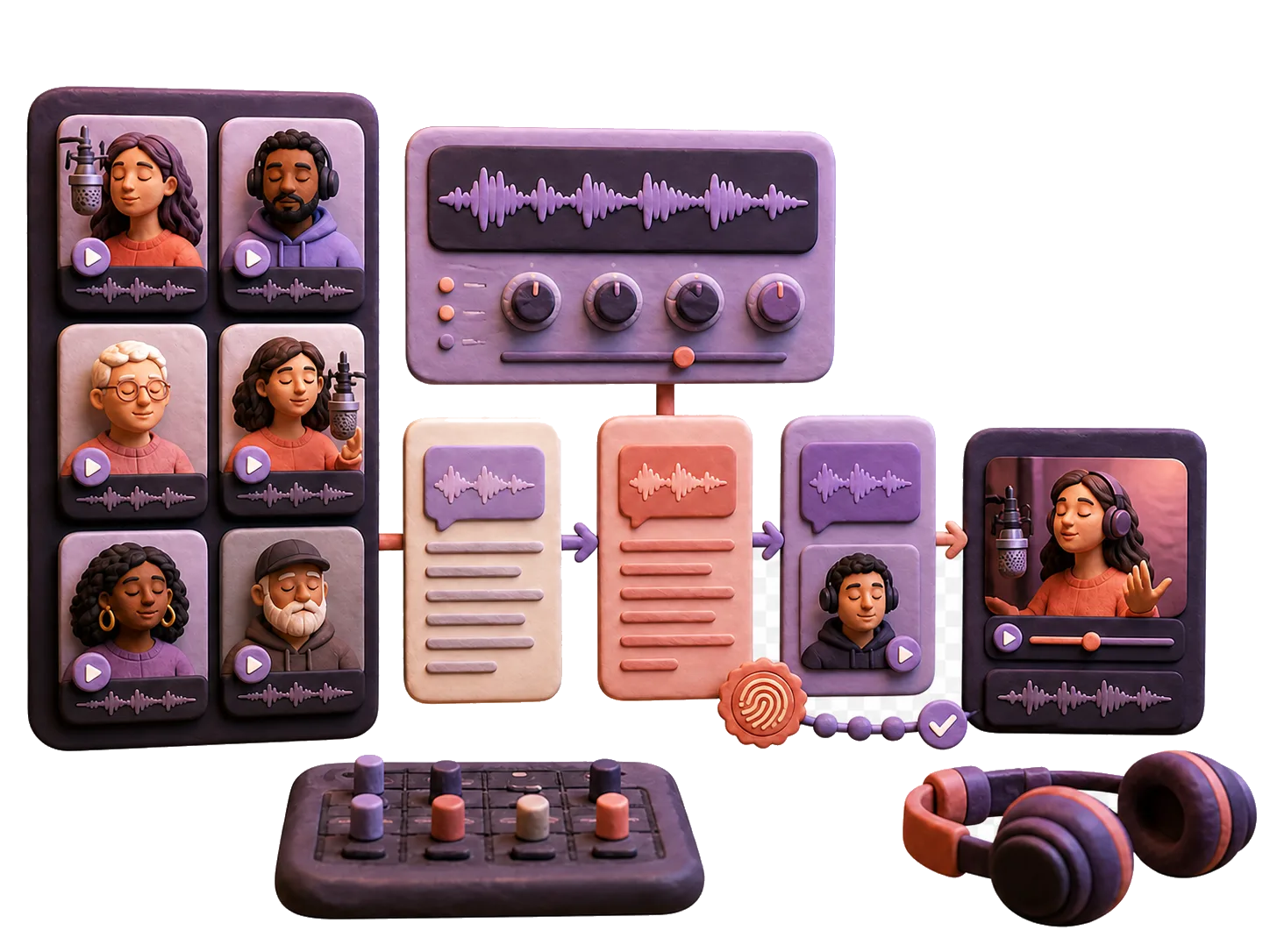
VoxNotch gives TTS a workspace: voice library, voice studio, read-aloud, narration runs, output assets, and an ethics page that keeps consent in the foreground.
Voice library with saved voices and generation context.
Workbench
A voice library makes generation repeatable.
Keep voices visible
Saved voices, speaker assignments, and generation settings belong in a library where you can inspect them again later.
Generate in context
Use read-aloud, narration, and dubbing flows from the same media workspace instead of copying transcript text into unrelated tools.
Voice and TTS questions
Does local TTS avoid character billing?
The local path avoids a vendor per-character TTS meter by default. You still own hardware, model licenses, review, and operations.
Does VoxNotch prove voice consent for me?
No. The product keeps consent and provenance visible, but possession of a voice sample is not legal permission to clone or synthesize that voice.
Quality controls
What makes generated voice usable.
Engine choice
Local-first when the engine and hardware are available; provider-backed only when you configure that path. Local TTS avoids a vendor per-character bill by default, while still making optional cloud voice paths explicit.
Reviewable outputs
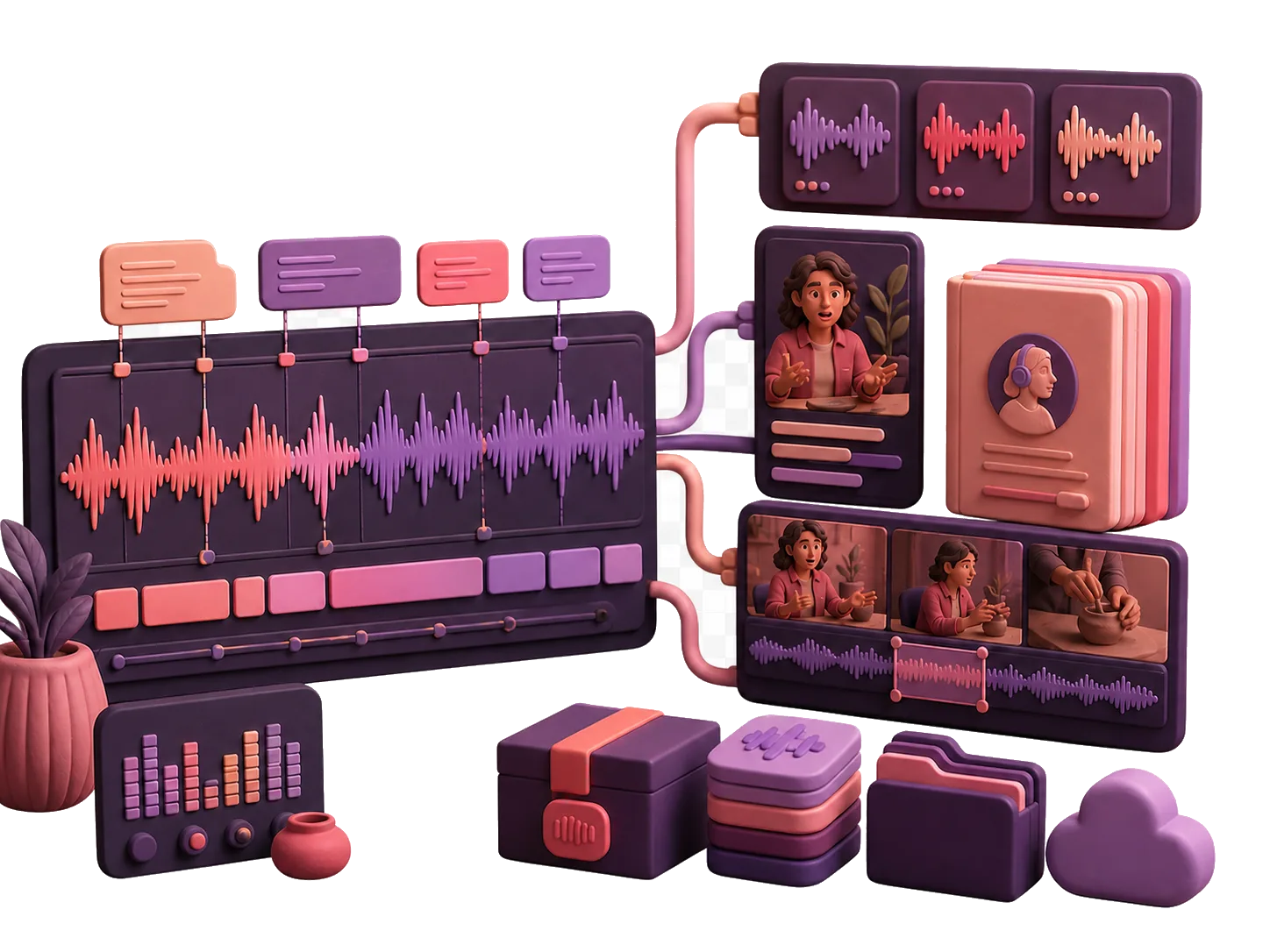
Generated audio becomes an asset that can be replayed, replaced, and traced to the workflow that created it.
Consent framing
The voice ethics page states the project position clearly: possession of a sample is not permission to clone a person.
Start with a short narration run.
Pick one script, one voice, and one output. Then decide whether local quality, speed, and consent controls fit your work.