Researchers
Turn interviews into a source-linked archive you can still trust later.
Research audio is not just raw material. It is consented source media, context, speakers, notes, corrections, and quotes that need to remain connected.
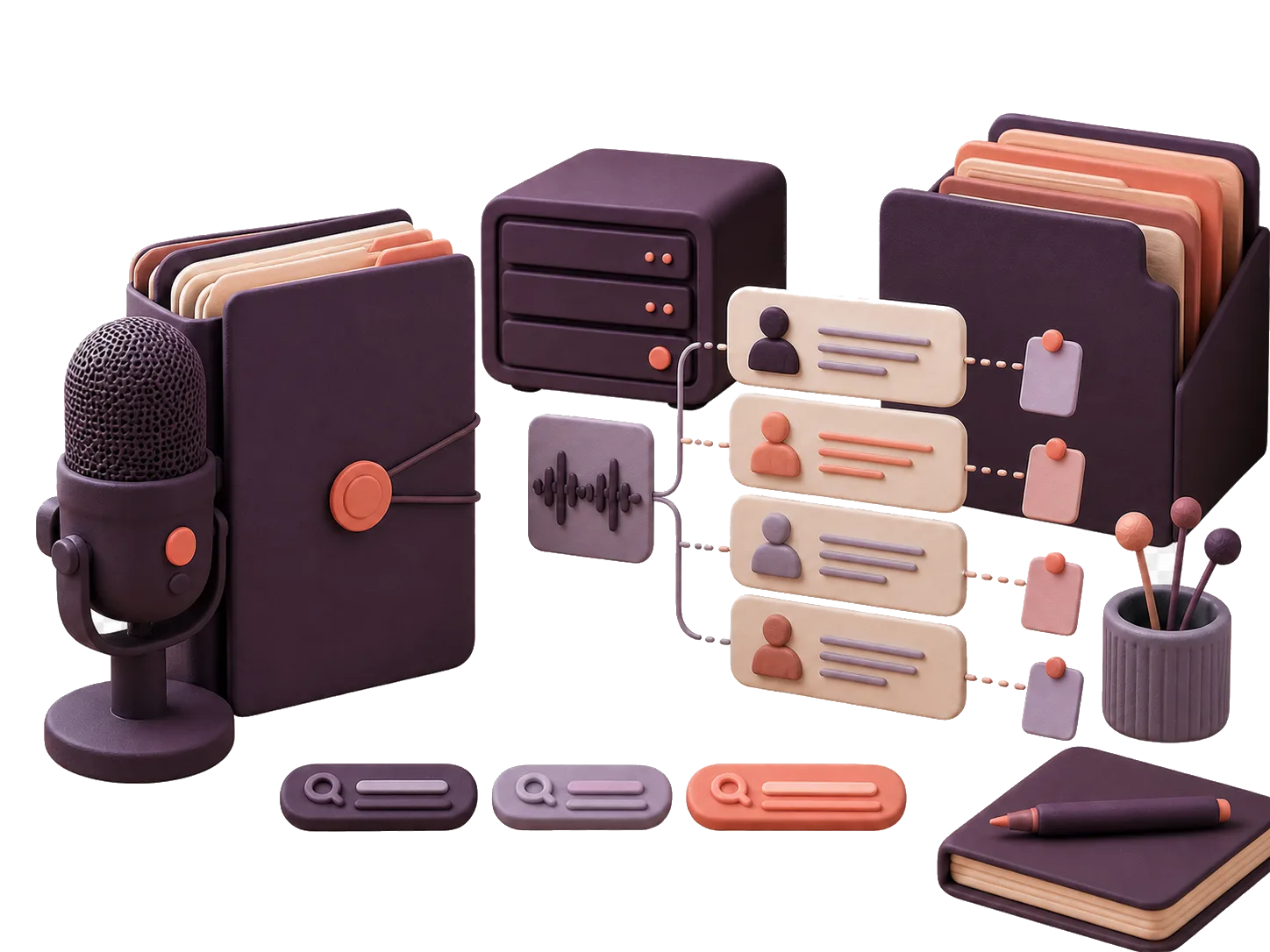
Interview audio becoming speaker-aware transcripts, notes, and collections.
Research flow
Keep analysis attached to the source recording.
Import interviews
Use browser capture, upload, or a watch folder for recorder dumps. Preserve source metadata so the library does not become a pile of anonymous audio files.
Review transcription
Inspect speaker turns, word timing, and names. VoxNotch argues for custody and workflow clarity rather than pretending any model eliminates review.
Annotate moments
Notes attach to the playhead, so a quote or observation can return to the exact source moment instead of drifting into a separate notes app.
Build the archive
Use search, tags, collections, and exports to support analysis, reports, captions, or downstream automation.
Research review still matters.
Transcription output should be reviewed before it becomes analysis evidence. Accents, crosstalk, field audio, and domain vocabulary can all degrade the transcript.
VoxNotch can keep the workflow private and source-linked; it does not replace consent procedures, IRB requirements, or data management plans.
Try the interview most likely to break weak tooling.
A noisy, multi-speaker recording is a better evaluation than a clean sample clip.